


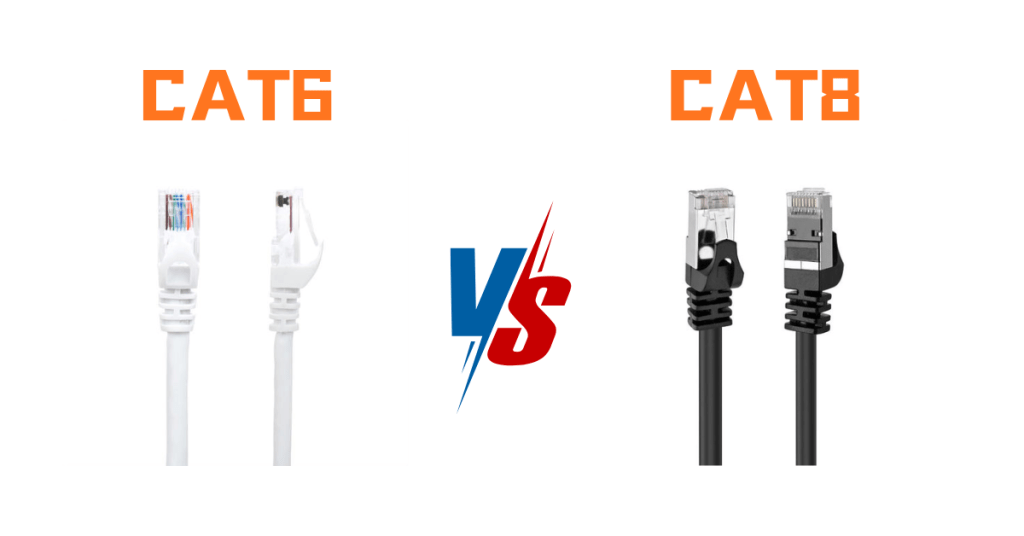
In Canada in 2025, the demand for network speed and stability—whether for home offices, small businesses, or avid gamers—has reached an all-time high. Choosing the right Ethernet cable is crucial for ensuring you can fully utilize your high-speed fiber internet connection.
The two most common high-performance options currently on the market are CAT6 and CAT8 cables. However, before you decide to upgrade or install a new network, understanding the key differences between them is essential. Is CAT8 truly the future for home users? Or does CAT6 still offer the best value for money?
This Canada Comparison Guide will delve into the performance, cost, and ideal use cases for both CAT6 and CAT8, helping you make the best choice in 2025.
Core Technical Comparison: CAT6 vs CAT8
| Feature | CAT6 (Category 6) | CAT8 (Category 8) | Ideal Use Case in Canada (2025) |
| Max Data Rate | 1 Gbps (up to 100m) | 25 Gbps or 40 Gbps | Most homes, Small/Home Offices (SOHO) |
| Max Bandwidth (Frequency) | 250 MHz | 2000 MHz (2 GHz) | Data centers, high-performance server rooms |
| Max Distance | 100 meters (1 Gbps) / 55 meters (10 Gbps) | 30 meters (25/40 Gbps) | High-speed, short-distance connections (e.g., within racks) |
| Shielding Type | UTP (Unshielded) or STP (Shielded) | Must be S/FTP or F/UTP (Heavily Shielded) | Budget-conscious, lower performance requirement |
| Cost | Low / Standard | Very High / Premium | Extreme performance, specialized applications |
CAT6: The Performance Workhorse
To this day, CAT6 remains the most common and recommended choice for most homes and small businesses in Canada. Why?
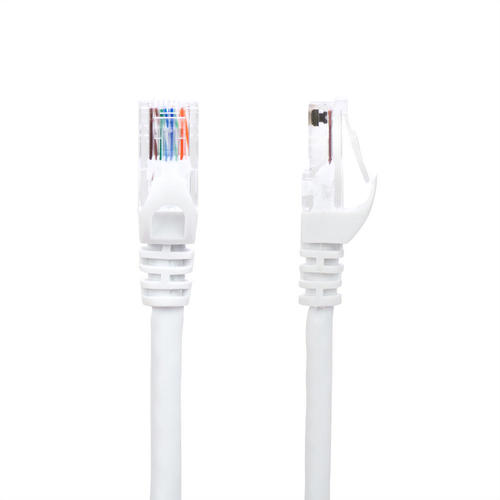
- Sufficient Speed: CAT6 handles up to 1 Gigabit per second (Gbps) over 100 meters. Given that most residential and even many small business internet plans in Canada peak around 1.5 Gbps to 3.0 Gbps (for premium fiber plans), a single CAT6 connection is usually fast enough for any single device (laptop, smart TV, game console).
- Cost-Effective: CAT6 is significantly cheaper to purchase, both in bulk cable rolls and pre-terminated patch cables. This is a major factor when wiring a larger Canadian home.
- Ease of Installation: It is more flexible and easier to terminate than the thicker, heavily shielded CAT8 cable, making DIY or professional installation faster and less costly.
Key Takeaway for Canadians: If your primary goal is reliable Gigabit speed and stability for streaming, conferencing, and gaming throughout your home, CAT6 is still the best value choice in 2025.
CAT8: The Data Center Specialist
CAT8 represents a significant leap in network technology, designed specifically for high-density environments like modern data centers and server farms.
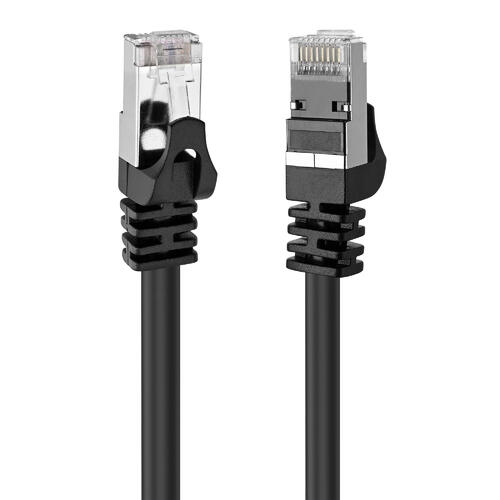
- Extreme Speed & Bandwidth: CAT8 supports blazing-fast 25 Gbps or 40 Gbps speeds with an immense 2000 MHz bandwidth. This allows for massive amounts of data transfer simultaneously.
- Heavy Shielding: To achieve its high frequency, CAT8 cables are heavily shielded (S/FTP or F/UTP), which virtually eliminates crosstalk and EMI (Electromagnetic Interference). This is crucial in noisy server environments but often overkill for a quiet home.
- Distance Limitations: Crucially, its highest speeds (25/40 Gbps) are only guaranteed over very short distances, typically up to 30 meters.
Is CAT8 Necessary for Your Canadian Home or Office?
In 2025, the answer is almost universally No.
- Speed Overkill: Unless you are connecting two high-speed servers together (e.g., a NAS to a server) over a short distance, a device-to-router connection will be limited by your internet speed or the device’s own Ethernet port (which is likely 1 Gbps or 2.5 Gbps).
- Cost Barrier: The premium price of CAT8 cables and the necessary 40 Gigabit switches (which are exponentially more expensive than standard Gigabit switches) make it impractical for non-enterprise use.
- Physical Installation: The thick, rigid, heavily shielded cable is difficult to run through standard residential wall conduits.
Final Verdict for Canadian Buyers (2025)
When deciding between CAT6 and CAT8, consider your specific needs:
| Scenario | Recommendation | Rationale |
| Standard Home/SOHO Network | CAT6 (or CAT6a for future proofing) | Best balance of cost, performance, and ease of installation for 1-10 Gbps speeds. |
| Gaming/4K Streaming Console | CAT6 | Perfect for achieving low latency and maximum connection speed of the device’s 1 Gbps port. |
| High-Performance Server Room/Data Center | CAT8 | Required for achieving short-distance 25/40 Gbps backbone connections and maximum stability against interference. |
| Wiring a New Home Build | CAT6a | CAT6a supports 10 Gbps up to 100 meters, future-proofing your installation for the next decade without the extreme cost of CAT8. |
Where to Buy in Canada
High-quality CAT6/CAT6a cables are readily available at major Canadian retailers like Amazon.ca. Additionally, consider PrimeCables—a favourite Canadian online retailer for both enthusiasts and IT professionals—known for offering professional-grade cables and networking accessories at highly competitive prices.
Focus on Quality: Look for cables that are CMR (Riser Rated) or CMP (Plenum Rated) if you are installing them within walls or ceilings, to ensure compliance with Canadian building codes and fire safety standards.
Frequently Asked Questions (FAQ)
1. What is the difference between CAT6 and CAT6a? Is the extra cost worth it?
CAT6a (Category 6 Augmented) supports speeds up to 10 Gbps over distances of up to 100 meters. Standard CAT6 only runs at 10 Gbps for 55 meters. For Canadians wiring a new home or looking to future-proof their network for the next decade, CAT6a is absolutely worth the moderate extra investment.
2. My ISP only offers 1.5 Gbps internet speed. Do I still need CAT8?
No. Your entire network will be limited by your Internet Service Provider’s speed cap of 1.5 Gbps. Even if your equipment can handle 40 Gbps, your connection to the public internet will max out at 1.5 Gbps. CAT8 is designed for ultra-high-speed, short-distance communication between servers inside a data center.
3. What is the difference between UTP, STP, and S/FTP? Which one should I choose?
- UTP (Unshielded Twisted Pair): The most common and cheapest; suitable for most homes.
- STP (Shielded Twisted Pair): Has extra shielding (foil or braid) inside the cable to better resist Electromagnetic Interference (EMI).
- S/FTP and F/UTP: Heavily shielded, required for CAT8. For the vast majority of Canadian residences, UTP CAT6/CAT6a is sufficient. Consider STP only if your environment has significant EMI (e.g., running near heavy electrical wires or industrial equipment).
4. Can I use different categories of cables in the same network?
Yes. However, the speed of your network will be determined by the slowest component in the chain. For example, if you connect a CAT8 cable to a CAT6 patch cord, and then to a 1 Gbps router port, the entire connection will be downgraded to 1 Gbps.


